



chevrolet extended warranty prices, a clear-eyed look

Sticker numbers seem tidy, yet the real cost hides in coverage tiers, deductibles, and dealer margin. I sort quotes by structure, not pitch, because that's where the math lives - and where soft assumptions creep in.

What actually drives the price

  • Vehicle profile: Trucks, performance trims, and high-tech cabins push the price up; base sedans sit lower. Mileage at purchase matters - lower miles usually means cheaper.
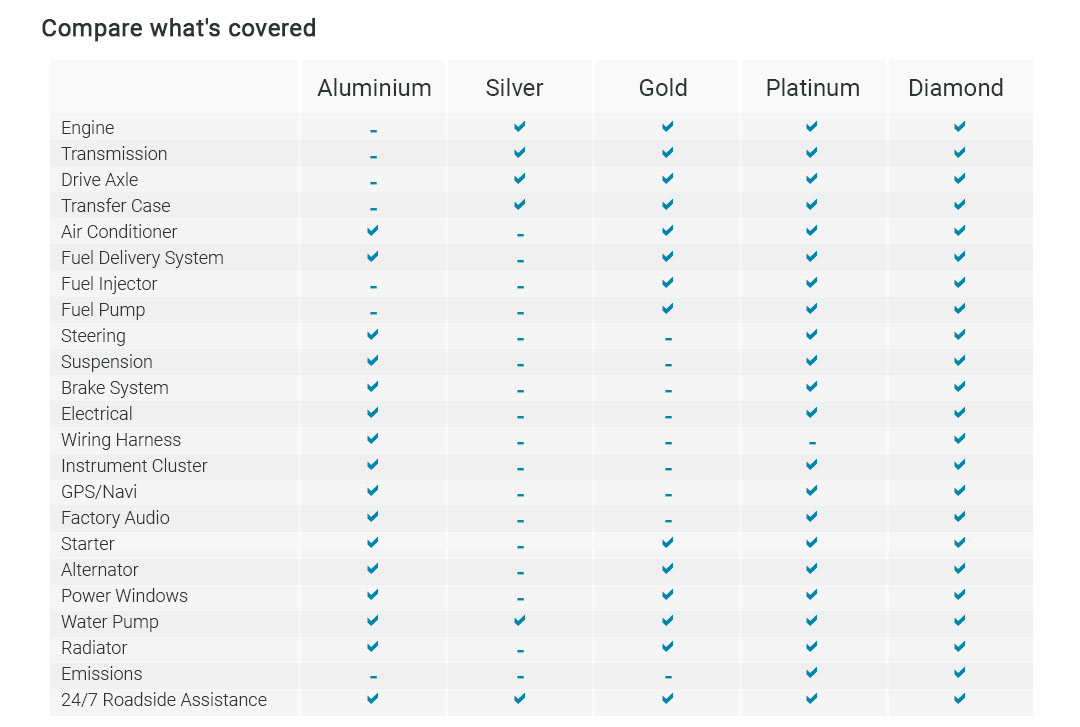
  • Coverage tier: Powertrain-only looks cheap but leaves many electronics out; "comprehensive/platinum" narrows gaps and costs more.
  • Term and miles: Longer terms and higher mileage ceilings add cost linearly at first, then sharply near 7 - 8 years or 100k+ miles.
  • Deductible: $0 per visit usually adds a few hundred; $100 - $200 per visit cuts price but shifts risk to you.
  • Where you buy: Manufacturer-backed plans are widely honored; third-party pricing can look low but may tighten claim rules. Dealer markup varies more than most people expect.
  • Region and labor rates: Metro areas with higher shop rates lift prices and claim payouts; contracts price that in.

Typical ranges I actually see

Not quotes for your exact car, just directional brackets that help sanity-check an offer. Real numbers swing with trim, mileage, and timing.

  • Compact/midsize Chevrolet cars (5 - 6 yr, ~60 - 75k total): roughly $1,200 - $2,200.
  • Crossovers/SUVs (6 - 7 yr, ~75 - 85k total): roughly $1,800 - $3,200.
  • Trucks and large SUVs (6 - 8 yr, ~85 - 100k total): roughly $2,200 - $4,000+.
  • EVs/hybrids: price bands skew higher; battery and power electronics rules differ by plan.

Soft doubt: these bands look neat on paper, but a single feature package - adaptive dampers, advanced infotainment - can nudge a quote unexpectedly.

Deductible math, not just feelings

Compare two options on the same tier: say $0 deductible at $2,450 vs $100 per visit at $2,050. If you file three claims, the $0 plan likely wins. If you file none or one, the $100 plan often comes out ahead. I pencil in expected claim count, then add a small "uncertainty tax" for the stuff I can't see coming.

A quiet real-world moment

At a Midwestern Chevy store last spring, the finance manager slid two printouts across the desk: 7yr/84k "broad" coverage with $100 deductible at $2,050, or 6yr/75k "max" with $0 deductible at $2,480. I chose the $0 plan. Five months later a water pump at 62k miles failed - my out-of-pocket was $0 and the rental cap covered two days. I still wonder if the cheaper plan would have been smarter had that repair never happened.

Manufacturer-backed vs third-party vs house-label

  • Manufacturer-backed: Broad dealer network acceptance, cleaner claim handling, generally steadier pricing. Usually pricier.
  • Third-party (reputable underwriters): Can be cheaper; read limits on labor rates, diagnostics, and consequential damage.
  • House-label/boutique: Sometimes generous, sometimes painfully narrow. Scrutinize sample contracts line by line.

How I read a quote, step by step

  1. Confirm in-service date and current mileage; verify term is "from in-service," not from today.
  2. Match term to how long you'll keep the Chevy and your yearly miles; ignore anything you won't reach.
  3. Ask for the tier definition and a sample contract; scan covered components, not marketing bullets.
  4. Note the deductible type: per visit or per repair. That one word can swing costs.
  5. Check exclusions (wear items, infotainment nuance, ADAS sensors) and any labor rate cap.
  6. Verify roadside, rental, and trip interruption caps; $30/day rental vs $45/day changes real costs.
  7. Look for EV/hybrid surcharges and battery provisions.
  8. Confirm transfer and cancellation rules (prorated? admin fee?).
  9. Compare financing vs paying cash; interest on a marked-up plan quietly adds to the "price."
  10. Request one higher and one lower deductible on the same tier to map the curve.

Ways to keep cost sensible without gutting coverage

  • Buy before mileage climbs; earlier is usually cheaper.
  • Don't overbuy term - align to realistic ownership, not hopeful "maybe I'll keep it forever."
  • Choose the deductible that matches your likelihood of claims; low-mile drivers often do fine with $100 - $200.
  • Skip overlapping perks if your insurance or credit card already provides roadside or rental.
  • Get a second quote from another Chevrolet store; identical coverage can land hundreds apart.

Small red flags I don't ignore

  • "Wear and tear" or "pre-existing" language so broad it swallows common failures.
  • "Disappearing deductible" tied to the selling dealer only - fine if you'll always return, risky if you move.
  • Caps on diagnostic time or shop labor rates below your area norms.
  • Ambiguity around ADAS sensors, infotainment screens, and modules - clarify in writing.
  • Vague EV battery coverage that references capacity loss without clear thresholds.

Bottom line

chevrolet extended warranty prices make more sense once you separate tier, term, and deductible from dealer markup. I treat the plan like any other component purchase: verify specs, model the downside, then buy the risk transfer only if the numbers - and my tolerance - agree. It feels simple in the showroom, but the best value shows up after a quiet hour with the contract and a calculator.

https://www.consumeraffairs.com/automotive/chevrolet-extended-warranty.html
Overall, the Chevrolet Protection Plan quotes we received for our sample vehicles indicated rates slightly above the average cost of an extended ...

https://www.automoblog.com/reviews/auto-warranty/chevy-extended-warranty/
However, quotes we received for the Platinum Protection Plan ranged from $1,153 to $2,528 depending on vehicle covered and chosen term length.

https://www.reddit.com/r/askcarsales/comments/xgd8vw/opinion_on_the_chevrolet_extended_warranty/
Extended warranty - $3148 - extends 'bumper - bumper' from 3/36K to 6yrs/100k miles with $100 deductible. Via 3rd party - not sure why they're not offering GM ...


atwratnwm
4.9 stars -1835 reviews